Singapore's April Inflation Eases to 1.8% — Economic Growth Revised Upward
 By John Nada·May 25, 2026·3 min read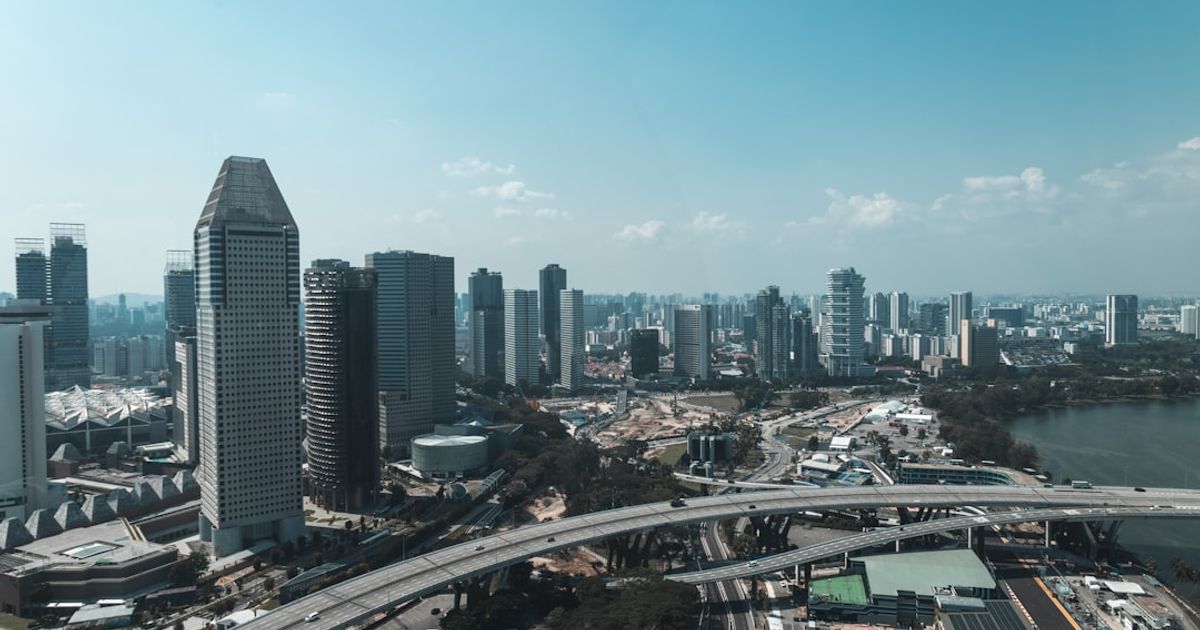
Inflation in Singapore slowed to 1.8% in April, defying expectations. Economic growth was also revised upwards, showcasing resilience.
A mild positive surprise greeted market analysts as Singapore reported a lower-than-expected inflation rate of 1.8% for April. Economists, according to CNBC Business, had estimated the figure to be around 2%. The core inflation, which excludes volatile sectors like private transport and accommodation, settled at 1.4%, falling short of the anticipated 1.7%. This data point signals a deceleration in the price increase of essential goods and services, providing some relief to consumers.
However, not all indicators are positive. Both Singapore's trade ministry and its monetary authority have warned of increasing imported cost pressures. Developments in the Middle East could potentially elevate energy and transport costs, making imported goods and services more expensive. This scenario paints a complex picture for Singapore's economic landscape as it navigates global supply chain disruptions.
Despite these challenges, the resilience of Singapore's economy is noteworthy. The trade ministry recently revised its first-quarter GDP growth to an impressive 6%, a significant leap from the initial 4.6% estimate and surpassing Reuters' 5.1% forecast. This upward revision underscores the robust performance of the city-state's economy amid global uncertainties.
Singapore's GDP growth projection for the entire year remains optimistic, with expectations of growth between 2% and 4%. This forecast persists even as energy-related disruptions in the Strait of Hormuz loom, reflecting confidence in Singapore's economic fundamentals. These numbers highlight the country's ability to adapt and thrive even when faced with external shocks.
Ripple Battled $150M Legal Costs — Chose Jobs Over Closure
Ripple fought a $150M legal battle against the SEC, choosing to protect jobs over dissolving.
The Monetary Authority of Singapore (MAS) has also taken notable steps in its monetary policy. Unlike most countries that rely on interest rates, Singapore manages its economic strategy by guiding the Singapore dollar within a policy band against a basket of currencies. This unique approach allows for a more nuanced response to inflationary pressures. In April, MAS tightened its monetary policy for the first time in three years, a move reflecting the need to address inflation concerns.
The precise levels of the policy band, however, remain undisclosed. This strategy provides flexibility in managing the currency's strength, which is crucial for a small, open economy like Singapore that is heavily reliant on trade. By doing so, MAS can effectively control imported inflation, which is a significant concern given the city-state's dependence on foreign goods and services.
Analyst Zavier Wong from eToro described the lower inflation reading as "a mild positive surprise." He noted that with peace talks in the Middle East showing progress and a recent dip in oil prices, there exists a "credible path to some imported cost relief" later in the year. This assessment offers a glimmer of hope for easing cost pressures, which could further bolster consumer confidence and spending.
Looking ahead, MAS anticipates that both headline and core inflation will range between 1.5% and 2.5% for 2026. This projection, while cautious, suggests that Singapore is preparing for a gradual stabilization of prices. The outlook remains contingent on several factors, including global economic conditions and geopolitical developments.
As Singapore navigates these economic challenges, the government and its monetary authority remain vigilant. The city-state's strategic location as a trade hub means that it is particularly sensitive to shifts in global trade dynamics and energy markets. Consequently, policymakers are focused on maintaining economic stability while fostering growth.