
Silver Plunges 5.4% — Fed's Rate Hike Fears Dwarf Iran Peace Deal
 By John Nada·Jun 23, 2026·5 min read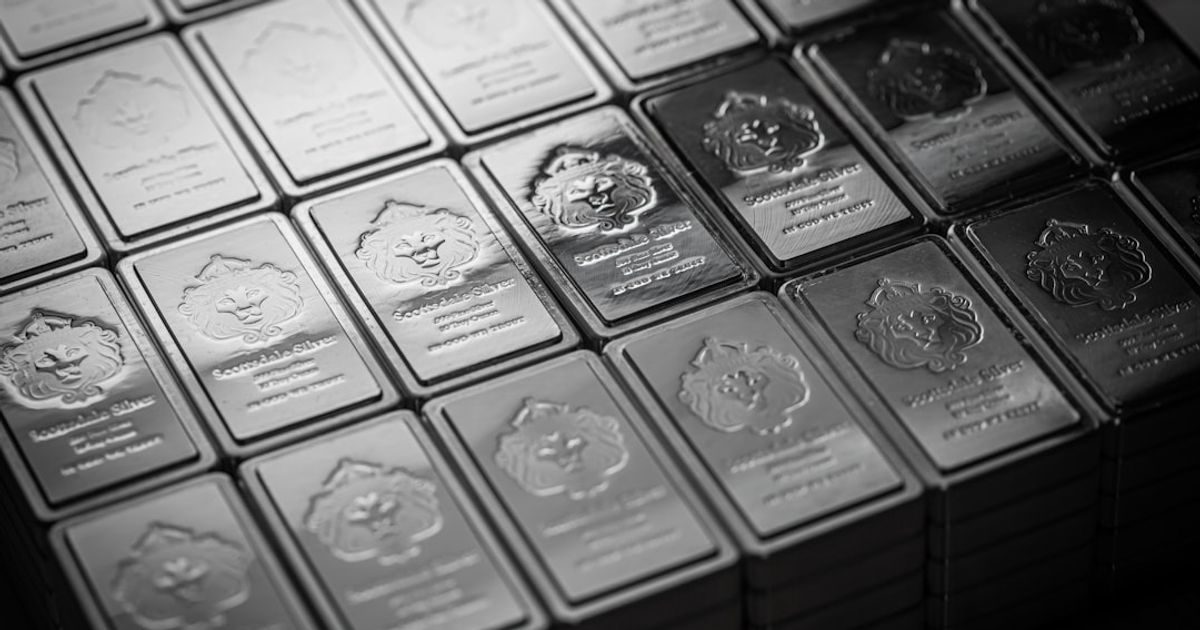
Silver dives 5.4% as Fed rate hike fears overshadow Iran peace dividend. Gold holds due to central bank support.
Gold's gentle 1.7% drop might seem like a ripple, but silver's 5.4% plunge is a seismic wave. The gold-silver ratio at 67:1 reveals market forces pulling in opposite directions, according to GoldSilver.com. It's not a valuation call—it’s a diagnosis.
As we explore the driving forces behind these movements, it becomes clear that the broader geopolitical and macroeconomic context is crucial. Silver's price dynamics are particularly sensitive to the interplay between industrial demand and monetary policy, making it a unique asset in the precious metals market.
The recent U.S.-Iran peace roadmap was expected to alleviate some of the inflationary pressures by reducing oil prices. With the U.S. granting Iran a license to sell oil on international markets, shipping through the Strait of Hormuz is recovering, leading to a decline in oil prices. In theory, lower oil prices should reduce inflationary pressures, making non-yielding assets like silver more attractive compared to Treasury yields. However, the Federal Reserve's updated inflation projections and the anticipation of a rate hike have overshadowed this potential benefit, causing significant market shifts.
The Federal Reserve's recent FOMC meeting revised inflation projections significantly higher. Nine of the 18 Fed officials foresee at least one rate hike before the year's end, as per the central bank's summary on June 17, 2026. This hawkish stance has amplified rate-hike fears, creating a headwind for silver. The CME FedWatch Tool now prices a roughly two-thirds probability of at least one hike before year-end, reinforcing the market's expectation of tighter monetary policy.
Silver's dual engines—monetary and industrial—are at odds. The monetary engine stalls under rate-hike pressure, while the industrial demand should roar with the peace dividend. But the specter of a 4.50% 10-year Treasury yield makes interest-free silver less attractive, GoldSilver.com highlighted. This dynamic has caused silver to fall more sharply than gold, highlighting the unique challenges facing silver investors.
Conversely, gold holds its ground. Central banks, unfazed by quarterly fluctuations, are buying gold at record levels. A survey by the World Gold Council found that 45% of central banks plan to increase gold reserves in 2026, providing a solid floor for gold prices. This institutional demand for gold, driven by central banks' strategic considerations, provides a buffer against the volatility affecting silver.
Looking ahead, the PCE inflation report on June 25 might shift the narrative. Forecasts say a 4.1% year-over-year increase is likely, the highest since April 2023, according to FactSet. A high print could cement rate-hike expectations, keeping silver suppressed. A softer print might give silver room to breathe. The market's reaction to this data will be closely watched, as it could provide crucial signals regarding the Federal Reserve's future policy direction.
Yet, the structural case for silver remains unchanged amid consistent supply deficits and robust industrial demand. The gold-silver ratio at 67 is a signal of temporary rate pressures, not a structural imbalance. When the Fed's grip loosens, history suggests silver might recover faster than gold. This historical pattern underscores the potential for silver to outperform once the current monetary pressures subside.
U.S. Quantum Push Puts $449 Billion in Bitcoin at Risk
President Trump's orders for quantum computing spark Bitcoin security fears, with $449 billion potentially at risk.
The gold-silver ratio, currently at its widest level since the peak weeks of the Iran war, serves as a diagnostic tool rather than a valuation gauge. This ratio, which hit approximately 67:1 on June 24, 2026, indicates the specific market tension playing out in real time. It now takes roughly 67 ounces of silver to buy one ounce of gold, a reflection of the prevailing monetary headwinds.
The US-Iran peace deal, which facilitated a decline in oil prices, was initially thought to provide a boost to silver. However, the market's focus has shifted to the Federal Reserve's revised inflation projections and the potential for a rate hike. This has resulted in a divergence between silver and gold, with silver bearing the brunt of these monetary concerns.
Silver's dual nature, driven by both monetary and industrial factors, makes it uniquely susceptible to shifts in monetary policy. The current environment, characterized by a 4.50% 10-year Treasury yield, poses a challenge for silver as an investment. Unlike gold, which benefits from central bank demand, silver lacks a similar structural support, making it more vulnerable to rate-driven pressures.
The upcoming PCE inflation report will be a critical data point for investors, as it captures May data when oil prices were still elevated. This backward-looking report may paint a picture of heightened inflationary pressures, potentially reinforcing the case for a rate hike. However, the market will also be looking ahead to the June PCE print, which will reflect the impact of lower oil prices and potentially alter rate-hike expectations.
Despite the current challenges, the long-term case for silver remains intact. The structural factors driving silver demand, such as supply deficits and industrial applications, have not changed. Investors who already hold physical silver can take solace in the fact that these fundamental drivers remain strong, even as the paper price fluctuates.
The widening gold-silver ratio in the current environment is not a signal to exit silver but rather a reflection of the temporary dominance of monetary policy concerns. Historically, when these pressures ease, silver tends to recover more rapidly than gold, offering potential upside for investors who can weather the current volatility.
As we await the PCE report and monitor the Federal Reserve's actions, the market remains on edge. Investors will be keenly observing how these developments unfold, as they hold significant implications for the trajectory of precious metals, particularly silver.