New York Fed President Warns of Economic Stagflation Risks Amid Iran War
 By John Nada·Apr 16, 2026·6 min read
New York Fed President John Williams warns that the Iran war could trigger stagflation, impacting inflation and growth. Supply chain disruptions are already evident.
New York Fed President John Williams raised alarms about the ongoing Iran war's potential to exacerbate inflation and hinder economic growth. In a recent address to bankers, he highlighted the conflict's role in increasing uncertainty and disrupting supply chains, particularly concerning energy. While expressing a general confidence in continued growth and a decrease in inflation over the year, Williams cautioned that the situation could lead to a stagflation scenario, characterized by slow growth and rising prices.
Williams noted that energy supply disruptions have already impacted prices, suggesting a potential supply shock that could elevate inflation through higher costs of commodities and intermediate goods. This dual threat poses significant challenges for the Federal Reserve, which aims to maintain stable prices and low unemployment. Although Fed Chair Jerome Powell recently downplayed stagflation concerns for the U.S. economy, Williams' remarks indicate that such risks remain on the radar of policymakers.
In his speech delivered to bankers in his home district, Williams articulated that the ongoing conflict in Iran has intensified the uncertainty surrounding both national and local economic conditions. The war has already shown signs of hiking prices and slowing growth, creating an environment where businesses and consumers might hesitate to make significant financial commitments. Due to this uncertainty, the Fed faces increased scrutiny as it attempts to navigate the turbulent economic landscape.
Assuming energy supply disruptions ease reasonably soon, Williams optimistically stated that energy prices should come down, and these effects should partially reverse later this year. However, he warned that the conflict could result in a large supply shock with pronounced effects that simultaneously raises inflation—through a surge in intermediate costs and commodity prices—and dampens economic activity. This has begun to play out already, with rising energy prices affecting a wide range of goods and services across the economy.
Such a condition—slow growth and high prices—is commonly referred to as stagflation and presents a toxic mix for central bank policymakers who would be left to choose which side to prioritize. Fed Chair Jerome Powell recently rejected that characterization for the U.S. economy, suggesting that while inflation remains a concern, the fundamental economic indicators do not warrant such dire classifications. However, Williams’ comments indicate that it remains a concern for policymakers, albeit in a reduced sense compared to the severe episode prevalent in the late 1970s and early '80s.
Williams pointed out there have been increasing disruptions in supply chains, specifically concerning energy and related goods. The New York Fed's own Global Supply Chain Pressure Index showed that conditions in March were the most strained since early 2023. This index is a critical gauge for economists and market watchers as it reflects the broader pressures facing supply chains, which are vital for maintaining economic stability and growth.
Not only are elevated energy prices showing up in the rising cost of fuel, but there are also pass-through costs in the form of higher airfares, groceries, fertilizer, and other consumer products. These rising costs are becoming a burden for households, which may contribute to a decrease in consumer spending—one of the main engines of economic growth.
Under the current conditions, Williams stated that monetary policy is well-positioned to balance the risks to maximum employment and price stability goals. The Federal Open Market Committee, of which Williams is a permanent voting member, decided in March to stay on hold, maintaining its benchmark rate targeted between 3.5%-3.75%. This decision reflects a cautious approach in light of the highly uncertain economic outlook and the ongoing geopolitical tensions that impact energy supply and demand dynamics.
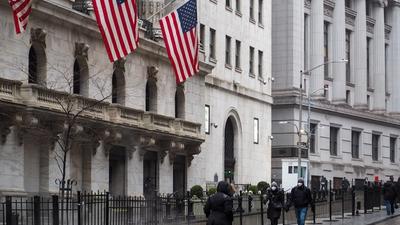
Banks Set Stage—Big Earnings and Inflation Data Loom
Q2 earnings kickoff sees banks and tech giants under the spotlight.
Markets are pricing in a 100% probability that the committee will maintain its stance at its upcoming meeting on April 28-29, indicating a consensus that the status quo is the most prudent course of action. In fact, many analysts do not expect any cuts to interest rates this year, highlighting a cautious but steady approach to monetary policy amidst rising inflationary pressures.
Williams did not commit to a future policy stance, emphasizing the importance of flexibility in responding to economic changes. He noted that the outlook is highly uncertain, which reflects the complexities of the current economic environment shaped by both domestic and international factors. Despite these uncertainties, he still sees real gross domestic product advancing at a 2%-2.5% clip this year, with inflation projected around 2.75%-3%. This projection underscores the Fed’s commitment to achieving its dual mandate of price stability and maximum employment while navigating the potential risks posed by external shocks like the Iran war.
Moreover, Williams highlighted that longer-term inflation expectations are largely in check, which provides some level of comfort for policymakers. This stability in expectations is crucial, as it can influence wage negotiations, consumer confidence, and ultimately spending behaviors across the economy. If inflation expectations remain anchored, it may help mitigate some of the adverse effects of rising prices in the short term.
As the situation unfolds, it is essential for the Fed to continue closely monitoring the economic indicators and adjust its policies as needed. The Iran war's potential to disrupt global oil supply is a significant concern, as energy prices can have a cascading effect on nearly every sector of the economy. Businesses reliant on energy for production and transportation may face increased costs, leading to higher prices for consumers and potentially slowing economic growth further.
In this context, the Fed's challenge lies in striking a delicate balance. On one hand, it must be vigilant against inflationary pressures that can erode purchasing power and consumer sentiment. On the other hand, it must foster an environment conducive to economic growth and job creation, especially in a post-pandemic recovery phase that many sectors are still navigating. The interaction between fiscal policy, international relations, and domestic economic conditions will play a pivotal role in shaping the Fed's actions in the coming months.
In light of these complexities, the Federal Reserve's engagement with various economic stakeholders becomes increasingly important. Regular communication about policy intentions and economic outlook can help to manage expectations and provide clarity to markets and consumers alike. As Williams and other Fed officials continue to address these pressing issues, the emphasis on transparency and responsiveness will be vital for ensuring confidence in the U.S. economy.
Furthermore, the potential for stagflation, while concerning, serves as a reminder of the interconnected nature of the global economy. Events in one region can have far-reaching implications for another, particularly in terms of energy supply and commodity prices. This interconnectedness underscores the importance of international cooperation in addressing economic challenges, as well as the need for resilient supply chains that can adapt to disruptions.