
Gold's Price Soars — Central Bank Purchases Defy Real Yield Logic
 By John Nada·Jun 29, 2026·3 min read
Gold's price defies real yield logic, driven by central bank buying and US dollar weakness, creating a robust foundation for its high valuation.
Gold stands near $4,000 per ounce as of June 2026, a sky-high valuation given its historical context and the climb from a January peak of $5,589. Yet, standard market models would suggest this shouldn't be the case. Rising real yields, typically a brake on gold, haven't stopped its ascent.
Central banks are rewriting the script. From 2022 to 2024, they purchased over 1,000 tonnes annually, eclipsing previous buying trends, according to the World Gold Council. Such voracious demand, driven by geopolitical tensions and strategic reserve diversification, established a new price floor. GoldSilver.com notes that even in 2025, central banks bought 863 tonnes, underscoring their enduring influence.
A key factor in gold's sustained price is the fundamental constraint of its supply. The total above-ground supply of gold is about 220,000 tonnes, fitting in a cube just 22 meters on each side. This finite supply increases by only about 1.8% a year, a rate that cannot be accelerated by technological or financial means. As demand increases, the limited supply ensures upward pressure on prices.
But why are real yields failing to suppress gold's value? The answer may lie in the US dollar's weakening grip. As the dollar loses ground, gold becomes an attractive hedge for international buyers, a phenomenon Goldman Sachs quantifies as adding $120 per ounce for every 50 basis points of Federal Reserve easing. In essence, the dollar's decline bolsters gold's demand globally.
However, real yields aren't obsolete. PIMCO's data from 2004 to 2025 establishes a clear inverse relationship between real interest rates and gold prices. A 100-basis-point uptick in real yields typically leads to an 18% decline in gold's inflation-adjusted value. Yet, gold's current trajectory suggests that this model is now playing second fiddle to larger forces.
The dramatic increase in central bank purchases underscores a strategic shift. After the freezing of Russia's foreign currency reserves in 2022, countries like China saw the importance of gold as a safeguard against geopolitical risks. By April 2026, China's central bank was purchasing about eight tonnes per month, with Chinese net gold imports reaching 317 tonnes in the first quarter of 2026 alone.
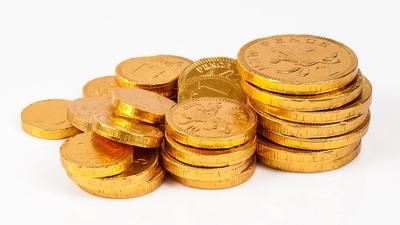
Gold Prices Hold Steady — August Futures Open at $4,101.10
Gold holds at $4,101.
Physical scarcity is one of the five forces driving gold's high price. Gold's limited annual growth rate and its historical role as a monetary asset make it unique compared to other metals. Central banks hold about 37,755 tonnes of gold as official reserves, highlighting its continued monetary significance.
The weakening US dollar plays a crucial role in gold's price dynamics. The dollar's decline is exacerbated by the US federal debt surpassing $36 trillion and annual interest payments exceeding $1 trillion. Goldman Sachs calls this the 'debasement trade,' noting that rate cuts by the Federal Reserve weaken the dollar and compress real yields simultaneously.
Gold's zero nominal yield becomes competitively attractive when real interest rates compress toward zero. This aspect, combined with its supply constraints and central bank purchases, has sustained high demand despite rising real yields.
Most investors searching for why gold is so expensive find the real mechanisms surprising. At roughly $4,000 per ounce in June 2026, gold sits 28% below its January 2026 peak. Yet it remains near its highest inflation-adjusted levels in modern history. Every major bank from Goldman Sachs to JPMorgan forecasts the price will trade significantly higher before year-end.
Ultimately, gold's price surge isn't mere speculation. Central bank activities, US dollar dynamics, and persistent monetary debasement create a robust foundation. Investors should recognize that while real yields remain pertinent, their predictive power is overshadowed by these structural shifts. Gold's current valuation rests on formidable pillars that aren't crumbling anytime soon.