Gold Prices Drop Amid Oil War: Understanding the Market Dynamics
 By John Nada·Apr 22, 2026·6 min read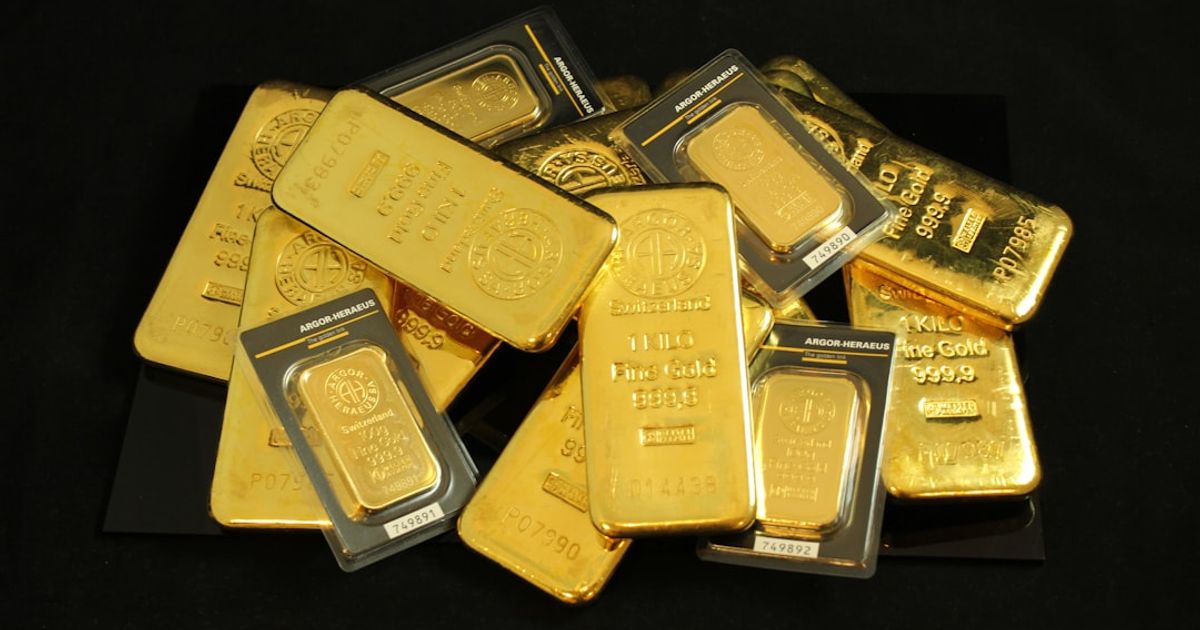
Gold prices have dropped nearly 10% due to the Iran War and rising oil prices, affecting market dynamics and inflation expectations.
Gold prices have fallen nearly 10% since February 28, highlighting a critical shift in market dynamics driven by the ongoing Iran War. This decline isn't a failure of the sound money thesis, but rather a result of surging oil prices, which have fueled inflation fears and diminished expectations for interest rate cuts. Consequently, the rise in real yields has pressured paper gold prices, leading to a significant divergence between paper and physical gold.
As the war escalated, oil prices spiked, prompting inflation concerns and a subsequent halt in rate-cut expectations from the Federal Open Market Committee. The committee maintained a rate range of 3.50-3.75% in March, with a high probability of another hold in late April. Gold, which yields no interest, became less attractive as high rates made holding it more costly, prompting institutional investors to sell off their positions in paper gold, comprising futures and ETFs.
This sell-off in paper gold reflects a broader macroeconomic recalibration. The financial market's response to the Iran War underscores a pivotal understanding of how geopolitical tensions can directly influence market perceptions and asset valuations. In this environment, institutional investors, who typically operate on the basis of yield and profit expectations, gravitated towards other assets as the allure of gold diminished amidst rising interest rates.
Despite the drop in paper gold prices, demand for physical gold remains robust, as evidenced by widening dealer premiums. According to USAGOLD, the spot price decline reflects ownership structure rather than a loss of value. Investors focused on physical gold have not been deterred by the futures market's volatility. The fiscal backdrop continues to support gold's long-term value, with a substantial annual deficit of approximately $1.9 trillion and around $1 trillion in annual debt service, as reported by the Congressional Budget Office.
The concept of fiscal dominance, where the size of the debt constrains the Federal Reserve's ability to raise rates significantly, plays a pivotal role in gold's price dynamics. Even as real yields remain elevated due to the war, this fiscal reality suggests a cap on those yields over the coming years. The ongoing conflict may have temporarily suppressed gold prices, but the fundamental drivers for gold remain intact, making its long-term outlook positive.
Historically, similar geopolitical events, such as the 1973–74 Arab oil embargo, led to comparable patterns where gold underperformed during periods of inflation-driven rate holds until a shift in the rate environment prompted a surge in gold prices. Analysts from Natixis estimate that the war's impact could be suppressing gold prices by as much as $750 per ounce. A decline in oil prices and a return of rate-cut expectations could trigger a recovery in gold prices, aligning them closer to their pre-war levels.
The current situation has also seen silver showing stronger performance in this environment, rising approximately 31% from its March war low. The gold-silver ratio has also compressed significantly, indicating a market adjustment towards historical norms. As the situation evolves, market participants should monitor key dates such as ceasefire negotiations and Federal Reserve meetings, as these will influence expectations for both oil and gold prices moving forward.
The divergence between paper and physical gold can be attributed to how these assets react under different market conditions. Paper gold, which includes instruments like COMEX futures and ETFs such as SPDR Gold Shares (GLD) and iShares Gold Trust (IAU), trades like a financial asset. It responds to rate expectations, margin calls, and institutional risk models. When the war changed the rate calculus, funds sold off paper gold, causing the spot price to drop. In contrast, physical gold maintained its demand due to its intrinsic value and historical role as a safe haven asset.
The ownership structure of gold plays a crucial role in understanding its market dynamics. While institutional investors may have moved away from paper gold due to the rising costs associated with holding non-yielding assets in a high-interest-rate environment, retail and individual investors have largely remained committed to physical gold purchases. This divergence is reflected in the widening dealer premiums that have emerged even as paper prices dropped. For those holding physical gold, the market's volatility in the futures space has little bearing on their long-term investment strategy.
Turning to the fiscal landscape, the U.S. government continues to grapple with significant fiscal challenges, including a staggering annual deficit of about $1.9 trillion and around $1 trillion in debt service costs. These figures, as highlighted by the Congressional Budget Office, are largely unaffected by any ceasefire in the Iran War. The concept of fiscal dominance indicates that the sheer size of the debt constrains the Federal Reserve's ability to raise interest rates significantly without risking a debt-service crisis. This sets a structural cap on real yields, which are closely tied to gold's performance over a multi-year horizon.
The ongoing conflict in the Middle East serves as a chapter in the broader narrative of gold's market dynamics, which are predominantly driven by fiscal realities rather than geopolitical fluctuations. While the war may temporarily impact gold prices, the underlying fiscal challenges facing the U.S. government ensure that real yields are unlikely to rise significantly in the long term. This scenario creates a favorable backdrop for gold as a hedge against ongoing economic uncertainties.
As noted, a decline in oil prices coupled with a return of rate-cut expectations could significantly alter the landscape for gold prices. The mechanics of how these changes would influence gold are clear: lower oil prices would reduce the Consumer Price Index (CPI), leading to expectations of rate cuts, compressing real yields, and ultimately allowing paper gold to recover. Analysts suggest that the current suppression of gold prices could be as much as $750 per ounce due to the war's geopolitical ramifications.
Market dynamics are not static, and several critical dates loom on the horizon that may influence gold prices. Key events such as the potential expiration of ceasefire negotiations, the April 28-29 Federal Open Market Committee meeting, and the University of Michigan inflation expectations print on April 24 will likely shape investor sentiment and expectations for both oil and gold.
The recent performance of silver serves as a noteworthy indicator of the shifting market dynamics. Having surged approximately 31% from its March war low of around $61 to approximately $79.90, silver has outpaced gold in this environment. This silver rally, coupled with the compression of the gold-silver ratio from around 90x to roughly 60x, suggests that market participants are adjusting their expectations and positioning themselves closer to historical norms. As conditions stabilize, the path forward for gold may depend significantly on the interplay of these factors.
Investors should remain alert to developments in both geopolitical and fiscal realms, as these will play a crucial role in shaping the future trajectory of gold prices. With the Iran War continuing to unfold and fiscal challenges persisting, the gold market remains an area of keen interest for those seeking to navigate the complexities of today's economic landscape. Understanding the nuanced dynamics of paper versus physical gold, alongside the broader fiscal context, will be essential for making informed investment decisions as market conditions evolve.