Gold Plummets 2.2% as U.S. Manufacturing Surges — Fed Rate Hike Looms
 By John Nada·Jul 19, 2026·4 min read
Gold falls 2.2% amid robust U.S. manufacturing data, raising Fed hike odds. Long-term gold prospects persist despite rate pressures.
Gold tumbled 2.2% to $3,973 per ounce, facing its worst day amid a soaring U.S. manufacturing index. This decline was triggered by a combination of robust manufacturing data and expectations of potential monetary policy tightening by the Federal Reserve.
The Philadelphia Fed manufacturing index, a crucial economic indicator, surged to 41.4 in July from 10.3 in June, far exceeding the consensus estimate of 13. This remarkable increase reflects an economy running hot, with new orders and shipments reaching five-year highs. The index surveys approximately 250 manufacturers in eastern Pennsylvania, southern New Jersey, and Delaware, providing an early monthly read on U.S. factory conditions. A reading above zero indicates expansion, and the July figure is not just an expansion—it's a significant acceleration that could impact the Federal Reserve's policy decisions.
Further bolstering the narrative of economic resilience, the labor market showed strength as well. Initial jobless claims fell to 208,000 for the week ending July 11, beating the forecast of 217,000. This data, released by the Bureau of Labor Statistics, highlights a labor market that remains tight, reinforcing the notion that the U.S. economy is in robust health.
However, this economic strength poses a dilemma for gold investors. When the economy thrives, the Federal Reserve is less likely to lower interest rates, which keeps real yields elevated. Real yields, defined as the difference between nominal interest rates and expected inflation, have a significant impact on gold prices. Since gold offers no yield, higher real yields make holding gold less attractive by raising the opportunity cost. Investors often shift their focus to assets that offer better returns, leading to a sell-off in gold.
The historical relationship between real yields and gold prices is well-documented by the World Gold Council. A 25-basis-point move in real yields typically results in a $40 to $60 per ounce change in gold prices. On Thursday, while there was no actual rate change, the probability of a future hike increased. According to the CME Group's FedWatch tool, traders pushed the odds of a September rate hike to roughly 51% by late afternoon.
Silver prices also took a hit, declining approximately 4% to $55.47 per ounce. Silver's dual role as both a monetary and industrial metal means it reacts differently to economic data. While strong manufacturing data could theoretically boost industrial demand for silver, the prospect of higher interest rates weighs more heavily in the short term.
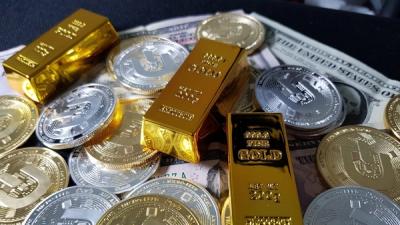
Despite Thursday's decline, the long-term rationale for holding gold as a hedge against currency debasement remains solid. The U.S. government's fiscal position provides context for this perspective. In fiscal 2025, the government ran a $1.8 trillion deficit, with annual interest payments on the national debt reaching $970 billion. The Congressional Budget Office projects that these payments will cross the $1 trillion mark in fiscal 2026. The expanding money supply required to service this debt underscores the ongoing risk of currency debasement.
The immediate focus for investors is on upcoming economic data releases. The University of Michigan's preliminary consumer sentiment and inflation expectations survey for July, scheduled for release on Friday, could add another layer of complexity to the Federal Reserve's decision-making process. Long-run inflation expectations have remained above 3% since the Iran conflict earlier this year, even as gas prices eased. A rise in these expectations would increase pressure on the Fed to maintain its current stance.
The Federal Open Market Committee (FOMC) is set to meet on July 28–29, with a hold on interest rates being the current consensus expectation. However, this week's data—retail sales up 0.2% in June, the Philly Fed's unexpectedly high reading, and tight jobless claims—reduces the likelihood of any easing signals. Gold, which has now fallen roughly 29% from its January 2026 all-time high of $5,589 per ounce, is approaching its lowest level since November 2025.
Nevertheless, one day's data does not alter the structural dynamics at play. The mechanism behind Thursday's gold price movement is a reflection of short-term economic indicators. In contrast, the structural case for gold, rooted in concerns over fiscal sustainability and monetary policy, remains intact. Gold's foundational allure as a hedge against long-term economic uncertainties is not easily dispelled by transitory data points.
For investors, the challenge lies in navigating these short-term fluctuations while maintaining a focus on the broader macroeconomic picture. As the market continues to digest new information, the debate over the Federal Reserve's ability to balance its rate stance with deep-rooted fiscal challenges persists. Today's data drove gold down, but its underlying value proposition endures.
Investors must watch closely as upcoming releases may shed further light on the Fed's trajectory. The market remains vigilant, and the story of gold is far from over.