Gold Holds Its Ground Amidst Rising Energy Prices and Market Volatility
 By John Nada·Apr 5, 2026·7 min read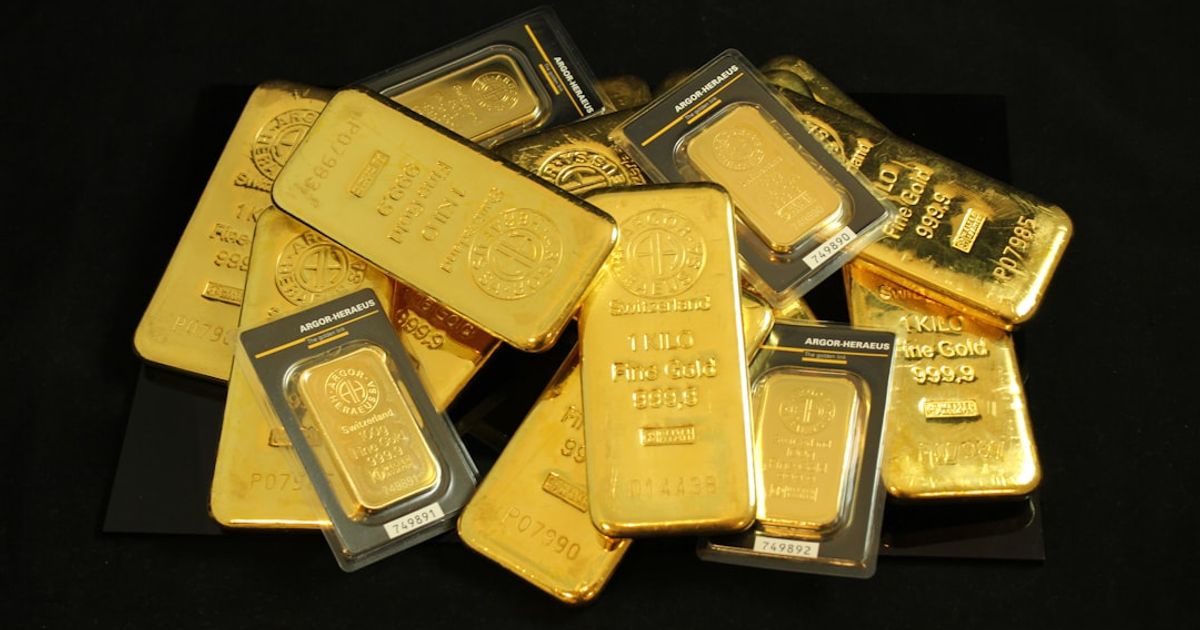
As energy prices soar, gold demonstrates resilience with a modest gain, contrasting with significant declines in equity markets amid rising inflation expectations.
The first quarter of 2026 concluded with notable market divergence, as energy prices surged while equities faltered. Oil prices skyrocketed by 73.5% due to the escalating conflict in the Middle East, creating supply fears and disruptions in shipping. This energy shock reverberated through global markets, causing significant declines in major equity indices and a pronounced risk-off sentiment among investors.
The year-to-date returns across major asset classes clearly illustrate this divergence. Oil’s dramatic increase, which reached a staggering 73.5% as of March 27, indicates the direct economic impact of geopolitical tensions on energy markets. Supply fears stemming from the conflict led to shipping disruptions and an environment of sustained uncertainty, pushing crude prices sharply higher throughout the quarter. As a response to this energy shock, the broader commodity complex followed suit; the Bloomberg Commodity Index also saw a notable rise of 22.3% year-to-date, signifying that this was not merely an isolated spike but a significant market movement that has not been seen in recent years.
Equities responded negatively to the rising energy costs, which compounded inflation expectations and eroded consumer confidence. The NASDAQ dropped 9.9% year-to-date, while the S&P 500 fell 7.0%. Furthermore, India’s Sensex emerged as the worst performer among major indices, plummeting by 13.7%. Bitcoin, often viewed as a gauge of risk appetite, also saw a sharp decline of 24.7%. Even traditionally resilient indices like Japan's Nikkei showed signs of weakening, with a modest gain of 6.0% stalling as the quarter ended. Economic indicators further supported this bearish outlook, with a decline in the S&P Global US Flash Composite PMI to 51.4, marking an 11-month low. Concurrently, the University of Michigan Consumer Sentiment Index dropped to 53.3, and one-year inflation expectations jumped to 3.8% from 3.4% in February, reflecting the palpable impact of energy price shocks on consumer behavior.
In contrast, gold exhibited relative stability with a year-to-date return of 3.1%, despite a slight pullback in late March. The LBMA Gold Price PM closed at $4,503 per ounce, influenced by inflationary pressures and the resulting cooling of Federal Reserve rate cut expectations. Even under duress, gold managed to hold critical technical support levels, specifically the 200-day moving average and the 38.2% Fibonacci retracement of its 2022–2026 uptrend, which are crucial indicators of market stability. This resilience signals that gold remains a reliable asset amidst broader market turbulence, aligning with its historical function as a stabilizer during periods of financial stress.
Gold's performance in Q1 2026, while not soaring to the heights seen in oil, reflects its inherent value during market volatility. Analysts note that the metal’s modest gain can be seen as a safe haven response, highlighting investors' inclination to seek refuge in gold when equities falter. The recent pullback, which saw gold down 1.3% on the week ending March 27, came against a backdrop of concerns surrounding a prolonged conflict that pushed inflation expectations higher. This situation cooled Fed rate cut expectations and weighed on gold's opportunity cost, prompting some investors to liquidate gold positions to cover losses in other areas. However, the fact that gold held its ground even under these pressures underscores its historical role as a stabilizing asset.
The looming risk of stagflation has heightened concerns among investors, complicating the economic landscape. Stagflation, characterized by slowing growth combined with persistent inflation, is particularly troubling for equities and bonds, which face the dual pressures of declining earnings and rising interest rates. In this context, gold often emerges as one of the few assets with a strong track record in such environments. The World Gold Council emphasizes that rising stagflation risk has historically favored gold, which tends to perform well as inflation rises in a stagnant economy. Currently, the geopolitical backdrop, marked by heightened tensions and uncertainty, further reinforces gold's relevance as a safe haven asset.
Despite some isolated instances of gold sales by central banks, the broader demand for gold appears robust. The World Gold Council's assessment indicates that strategic motivations for holding gold remain intact, especially considering the current geopolitical landscape. The concerns surrounding inflation and economic stagnation have led many investors to reassess their portfolios, increasingly viewing gold as a necessary hedge against economic instability.
As the market navigates these complexities, the implications for investors are clear: gold's stability amidst volatility may solidify its position as a crucial asset class. With inflation expectations heightening and geopolitical uncertainties persisting, gold's appeal as a hedge against economic instability will likely remain strong. The interplay between rising energy prices and market dynamics will continue to shape investment strategies, making gold a focal point for those seeking refuge from market turmoil. This scenario is particularly relevant as economic data continues to evolve, and the potential for stagflation becomes more pronounced.
Investors are keenly aware of the implications of stagflation on their asset allocations. The challenges posed by this economic environment are daunting, as conventional methods to address inflation often exacerbate growth slowdowns. Weaker earnings and higher interest rates compress equity valuations, while bonds face erosion from inflation, making gold one of the few assets that can thrive in such conditions. The historical performance of gold during stagflationary periods, as documented by the World Gold Council, underscores its potential to deliver strong returns when faced with economic headwinds.
Looking ahead, March labor market data will be pivotal in determining the trajectory of stagflation concerns. If the data comes in weak alongside energy-driven inflation, the stagflation thesis will shift from a theoretical concern to a tangible reality. The ongoing geopolitical tensions and economic uncertainties will further complicate the landscape for investors, making gold’s role as a stabilizing force even more critical.
As the quarter progresses and investors reassess their strategies, gold's technical support levels will be closely monitored. The resilience shown in holding these levels amid selling pressures is a significant signal for market participants. Analysts from the World Gold Council describe this support hold as substantial, indicating that while short-term risks exist, the medium-term fundamentals remain constructive, particularly with stagflation risk, central bank demand, and cooling rate cut expectations.
In this context, potential buyers may find themselves in a favorable position to consider gold as part of their portfolio. The dynamics of the market, combined with rising inflation expectations and geopolitical uncertainties, make a compelling case for gold’s inclusion. Investors are advised to remain vigilant and informed as they navigate the complexities of the current economic landscape, recognizing that gold may serve as a vital anchor in turbulent times.
The broader implications for investment strategies are profound. With energy prices continuing to exert upward pressure on inflation, and equities facing pressures from both earnings declines and potential interest rate hikes, the case for gold as a safe haven becomes increasingly compelling. Investors must consider not only the immediate market movements but also the underlying economic indicators that suggest a prolonged period of volatility ahead.
Consequently, gold’s historical performance as a stabilizer during financial crises positions it as an essential asset in any diversified portfolio. The current environment serves as a reminder of the importance of strategic asset allocation, particularly in light of the potential for stagflation and the ongoing geopolitical uncertainties that are likely to influence markets for the foreseeable future. As such, gold will undoubtedly remain a focal point for investors seeking to mitigate risk and navigate the complexities of an evolving economic landscape.