
Gold Defies Gravity at $4,481 Amid Rate Hike Pressure
 By John Nada·Jun 4, 2026·5 min read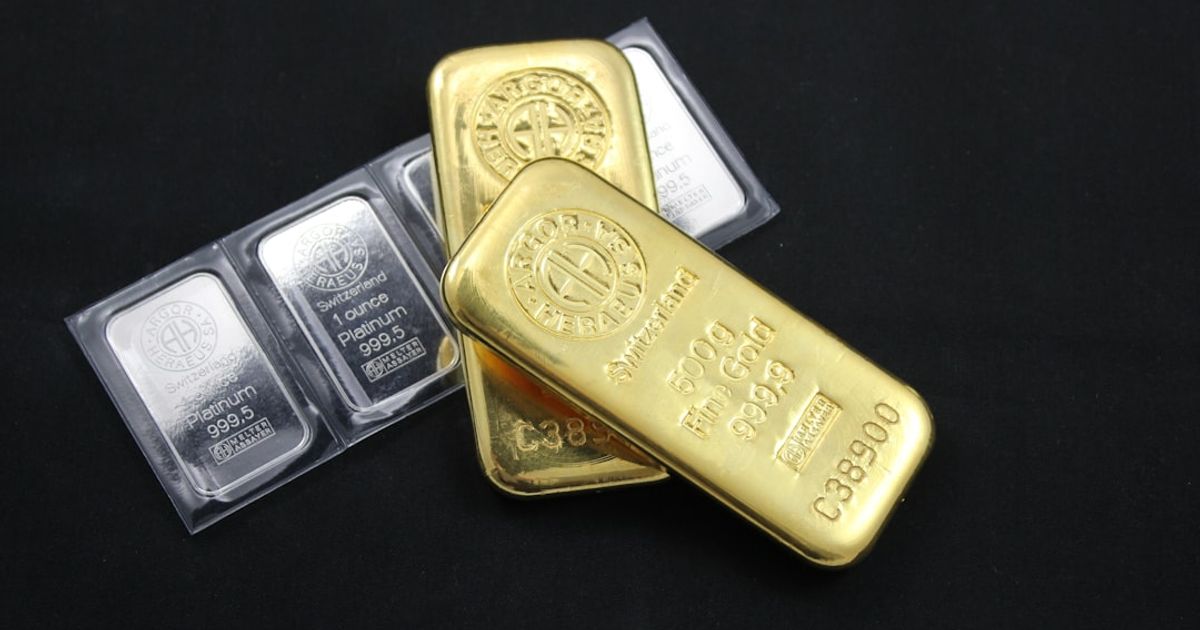
Gold holds at $4,481 amid rising rate hike expectations, defying usual trends. Key NFP jobs report tomorrow could shift dynamics.
Gold has held its ground at $4,481, defying typical expectations as markets grapple with the rising possibility of a Federal Reserve rate hike before the year's end. GoldSilver.com highlights this unusual stability amid what would normally be bearish conditions for the precious metal.
The Bureau of Labor Statistics is set to release the crucial NFP jobs report tomorrow morning, a key indicator likely to sway Fed policy at their upcoming meeting. The report, scheduled for release at 8:30 a.m. ET, will be the final major data point before the Federal Reserve’s meeting on June 16–17. This timing places the jobs report at a pivotal juncture for gold, as it trades near $4,481 today, buoyed by factors that seem immune to the rate hike pressures being repriced into the market. Normally, such conditions would send gold plummeting, but it hasn't.
Wall Street expects the NFP report to show about 80,000 new jobs in May with unemployment steady at 4.3%. This is a decrease from April's 115,000, indicating a slowing but resilient labor market. ADP's private payroll data, however, painted a more optimistic picture with 122,000 jobs added, surpassing expectations. Meanwhile, the Job Openings and Labor Turnover Survey (JOLTS) data showed that April job openings rose to their highest level in nearly two years, further underscoring the labor market's resilience.
Three potential outcomes from the NFP report could shape gold's trajectory. A strong jobs report would likely intensify rate hike expectations, pressuring gold towards the $4,400 support level. If jobs numbers come in as expected, gold might consolidate between $4,450 and $4,525, maintaining current tensions. However, a significant miss could see gold rallying toward $4,600 as rate hike bets diminish.
Interestingly, the Fed faces a dilemma: a rate hike could exacerbate the costs of the U.S. national debt, yet failing to act might allow inflation to erode savings. The U.S. national debt stands at approximately $39 trillion, with interest payments alone surpassing $1 trillion annually. This creates a peculiar environment where gold, impervious to debasement and counterparty risk, stands as a symbol of financial sovereignty. This duality of policy mistakes—the choice between raising rates and letting inflation run unchecked—has heightened the appeal of gold as a hedge against economic uncertainty.
Beyond the headline jobs figure, the unemployment rate, wage growth, and labor force participation will offer further insights. The average hourly earnings month-over-month is particularly crucial, as it provides a clearer picture of wage inflation, a key consideration for the Fed. The labor force participation rate will also be closely monitored; a decline in participation while unemployment holds could question the narrative of a strong labor market.
The upcoming Fed meeting, chaired by Kevin Warsh, adds another layer of complexity to the market's calculus. Warsh, confirmed as the new Federal Reserve Chair, is set to preside over his first major policy meeting. His approach and the outcomes of this meeting are anticipated with great interest, as they may indicate the direction of future monetary policy.
Gold's behavior post-NFP will likely reveal more than the report itself. Over the past year, gold has demonstrated a remarkable ability to hold its ground despite pressures that would typically drive prices lower. This resilience suggests a potential structural shift in the market's dynamics, where gold's traditional inverse relationship with rate hikes is being challenged.
The Fed's inflation gauge, the Personal Consumption Expenditures (PCE) index, recently surged to 3.8%, while GDP growth remains sluggish at 1.6%, signaling stagflation. This economic backdrop further complicates the Fed's decision-making process. Stagflation, characterized by stagnant growth and rising inflation, historically supports gold prices as investors seek refuge from eroding currency values.
The market's anticipation of the NFP report and its implications for Fed policy have created a tense environment for investors. The report’s outcome will not only impact gold but also influence broader market sentiment, including the U.S. dollar and Treasury yields. A strong jobs report may bolster the dollar, leading to higher nominal yields, which could pressure gold. Conversely, a weaker-than-expected report might ease rate hike fears, supporting gold prices.
Investors are advised to pay close attention to the nuances of the NFP report, as its intricacies could have far-reaching effects on market dynamics. The focus will be on whether the unemployment rate holds steady, wage growth accelerates, and how labor force participation shifts.
As the Fed navigates between its dual mandates of price stability and maximum employment, gold remains an attractive asset for those seeking a hedge against potential policy missteps. The metal's recent performance suggests that its role as a safe haven and store of value is as relevant as ever.
With the Fed's June meeting looming, the interplay between economic data, market expectations, and monetary policy will continue to shape the landscape for gold. As investors brace for potential volatility, the importance of understanding the underlying mechanisms driving gold's stability becomes paramount. The upcoming days will test whether gold can maintain its current trajectory or if market forces will push it in a new direction.