
Central Banks Reignite Gold Fever — 1,000 Tonnes Per Year
 By John Nada·Jun 6, 2026·6 min read
Central banks have shifted strategy, purchasing over 1,000 tonnes of gold annually. The move underscores gold's renewed role as a financial safe haven.
It was February 2022 when the financial world felt a tremor. Western powers froze more than $300 billion in Russian foreign reserves, a move that sent shockwaves through sovereign wealth managers globally. In response, central banks turned their gaze to an asset that couldn't be frozen — gold.
According to GoldSilver.com, the buying frenzy hasn't waned since, with central banks purchasing over 1,000 tonnes annually for the past three years. This marks a dramatic shift from the previous average of 473 tonnes per year from 2010 to 2021. The reasons are clear: Gold offers a stability and neutrality unmatched by any other asset.
Simone Knobloch, CEO of Switzerland's Valcambi, knows this all too well. His refinery, the largest globally by capacity, handles precious metals for heavyweight clients like national banks and major metal traders. As he recently stated, "In an unpredictable world, gold is still a safe haven," echoing the sentiments of the clients who trust gold's timeless allure.
Gold's appeal isn't merely theoretical. The World Gold Council's survey found that nearly 70% of central banks plan to increase their gold reserves over the next five years. It's not just a hedge against uncertainty; it's a response to the weaponization of financial systems. Gold possesses qualities that make it immune to sanctions, unlike dollar or euro reserves.
Switzerland, home to Valcambi, plays a critical role in this gold narrative. Swiss-refined gold boasts three key advantages: stringent purity certifications by independent sworn assayers, financial infrastructure that lowers refining costs, and a stable political environment that reduces insurance expenses. These factors make Swiss gold a global benchmark for quality.
But it’s not just about what’s mined. The source of gold is gaining importance. Valcambi’s meticulous scrutiny of suppliers, including the UAE, underscores the emphasis on ethical sourcing and compliance with standards like LBMA Good Delivery.
The uptick in sovereign gold buying isn't just about fear or hedging. It's a structural revaluation. Countries are not just bracing for financial weaponization; they're also holding onto their gold domestically, reducing the amount available to the global market. As Knobloch notes, this isn't simply a market reaction; it's a repositioning of gold's role in the monetary system.
Currently, gold trades at $4,379 per ounce, a pullback from its peak of $5,590 in January 2026. But this isn't a sign of waning interest. According to GoldSilver.com, it's influenced by rising rate-hike expectations amid inflation concerns. The underlying demand drivers — central bank buying, regulatory shifts, and geopolitical tensions — remain robust.
The World Gold Council reports that central banks purchased more than 1,045 tonnes of gold in 2024 alone, marking the continuation of a 15-year consecutive buying streak. This sustained interest underscores the fact that central banks are not merely reacting to transient market conditions but are instead committed to a long-term strategy of diversification.
The strategic allure of gold lies in its unique physical and economic properties. Unlike other reserve assets like oil or agricultural commodities, gold does not rust or degrade. Its indestructibility ensures that the approximately 201,000 tonnes of gold mined throughout history remain in circulation as a tangible store of value. This contrasts with other commodities, which are consumed and thus diminish over time.
The structural integrity of gold as a reserve asset is further bolstered by its limited annual supply increase of about 1.5–2% through new mining. This predictability in supply growth enhances its appeal to central banks looking for stable, long-term investments. The World Gold Council's data reflects this, showing a sharp increase in gold purchases from 477 tonnes in 2014 to a record 1,136 tonnes in 2022.
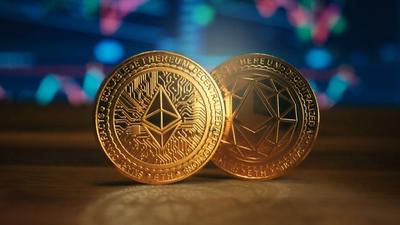
BitMine Raises $274M for Ethereum Push — Aims at Institutional Finance
BitMine raises $274M via preferred shares to bolster Ethereum investments, despite market volatility.
The event that notably accelerated this trend was the 2022 sanctions, which highlighted the vulnerability of traditional reserve assets to geopolitical actions. When Western governments froze Russian reserves, the ability of gold to remain unfrozen, unsanctioned, and outside the reach of SWIFT or any financial embargo became a critical selling point. This led to a reevaluation of gold's role within the portfolios of central banks, especially those in emerging markets and BRICS nations.
Simone Knobloch's leadership at Valcambi during this pivotal time also underscores the importance of institutional trust in gold's market. As CEO, Knobloch emphasizes that the demand for gold is not just a theoretical safeguard but a reflection of real institutional behavior. Valcambi's processing of 1,000 tonnes of precious metals annually positions it at the heart of this global shift.
The Swiss gold infrastructure provides additional layers of value that appeal to institutional investors. The country's regulatory environment, characterized by the use of independent sworn assayers, ensures the highest standards of purity and quality, which is crucial for maintaining LBMA Good Delivery accreditation.
Moreover, Switzerland's well-established financial infrastructure offers credit lines during the refining process, reducing costs and making the processing of gold more efficient. This is complemented by the country's political stability, which translates into lower insurance costs for handling and storing gold.
The source of gold has also become a focal point in recent years. As ethical sourcing gains prominence, Valcambi's approach to supplier scrutiny reflects a broader industry trend towards transparency and compliance with international standards. The company's selective engagement with UAE suppliers illustrates the importance of due diligence in the gold supply chain.
This focus on ethical sourcing is not only about maintaining industry standards but also about meeting the expectations of investors who are increasingly concerned about the origins of the assets they hold. For individual investors, understanding these institutional dynamics is crucial, as the same standards that apply to national banks are embedded in the physical gold products available to retail investors.
In the current financial landscape, gold's strategic significance is reinforced by its performance relative to other commodities. While its price has retreated from its January 2026 peak, the broader trends driving its demand remain intact. The price fluctuations are largely influenced by macroeconomic factors such as interest rate expectations and inflation, rather than a fundamental shift in gold's market position.
The broader narrative surrounding gold points to its evolving role as both a strategic asset and a commodity. As central banks and national governments continue to reevaluate their reserve compositions, gold's status as a non-negotiable component of financial stability is more secure than ever. This is evidenced by the behavior of gold-producing countries that are increasingly retaining their gold domestically, thus limiting its availability on the global market.
This structural shift is indicative of a deeper revaluation of gold within the global monetary system. Central banks are effectively reinforcing a gold-backed floor, which individual investors can also tap into by holding physical gold outside the traditional financial system. This alignment between institutional and retail investors marks a convergence that underscores gold's enduring appeal.
Ultimately, the current gold market reflects a confluence of factors that have cemented its status as a cornerstone of financial security. The ongoing commitment of central banks to increase their gold holdings, coupled with the responsible sourcing practices of leading refineries like Valcambi, illustrates a robust framework that supports gold's continued prominence in the global economy.